ADVANCED DIAGNOSTIC IMAGING
Digital X-Rays
State-of-the-Art Dental Imaging
Digital X-rays represent a significant advancement in dental diagnostic imaging. Using cutting-edge digital technology, we capture detailed images of your teeth, jawbone, and surrounding tissues with minimal radiation exposure. These high-quality images allow us to detect problems early, plan treatment precisely, and monitor your oral health over time.
At Glendale Dental Wellness, Dr. Ivan Chan utilizes digital X-ray technology as part of every comprehensive exam -- providing the most advanced, safe, and effective diagnostic care available.
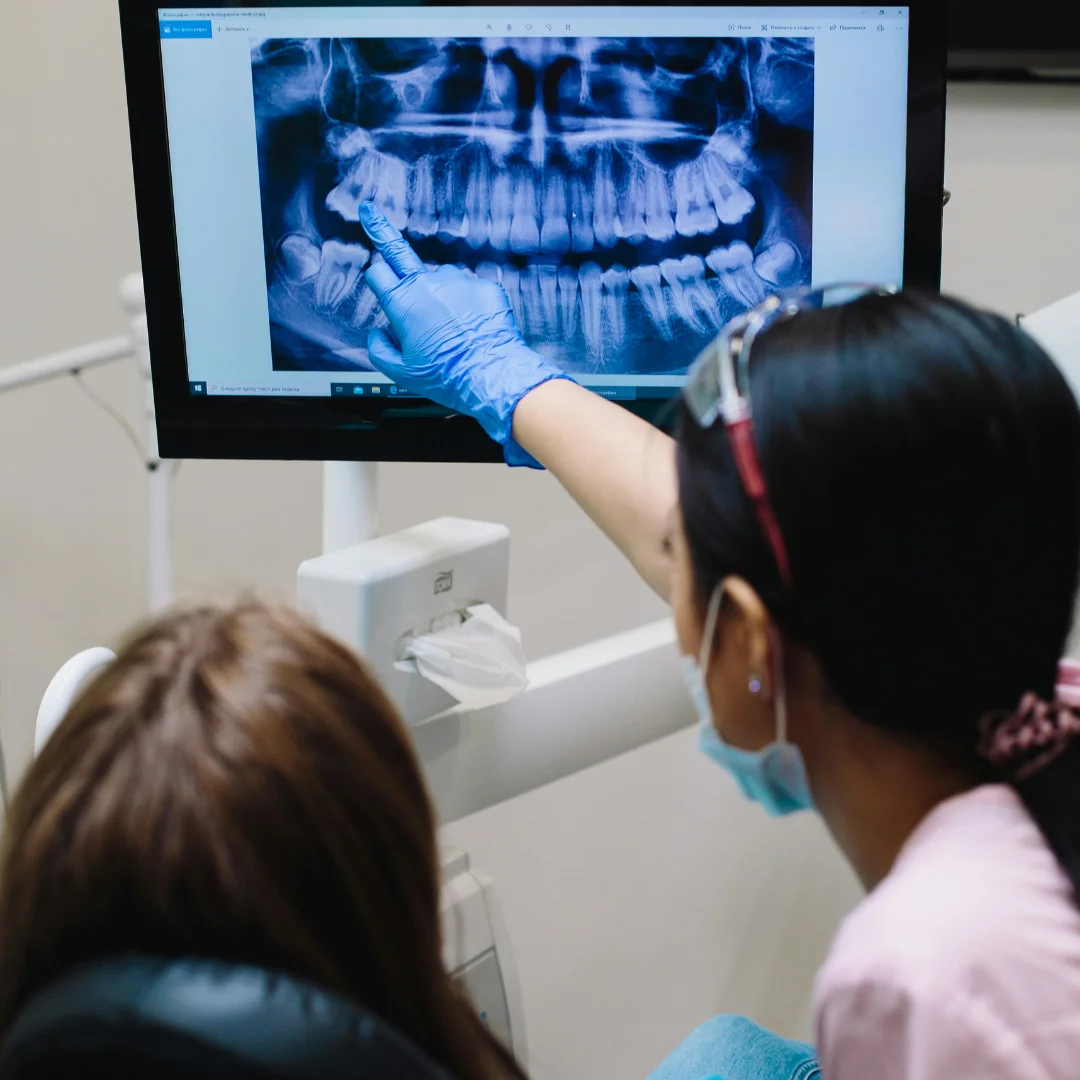
Why Digital X-Rays Matter
Many dental problems develop beneath the surface where they can't be seen during a visual exam alone. Cavities between teeth, infections at the root tip, early bone loss from gum disease, and hidden fractures all require imaging to detect. Without X-rays, these conditions can progress silently until they cause pain or require more extensive treatment.
Digital imaging gives Dr. Chan the ability to catch problems at their earliest, most treatable stage -- saving you time, discomfort, and cost. The images are instantly available, can be magnified for detail, and are easily shared with specialists when a referral is needed.
Types of Digital X-Rays We Use
Our office is equipped with a full range of digital imaging systems, allowing Dr. Chan to select the right type of X-ray for your specific diagnostic needs.
Bitewing X-Rays
Show the crowns of upper and lower back teeth in one view. Bitewings are the standard for detecting cavities between teeth and early signs of bone loss from gum disease during routine checkups.
Periapical X-Rays
Capture the entire tooth from crown to root tip, including surrounding bone. Essential for diagnosing infections, abscesses, and planning procedures like root canal therapy.
Panoramic X-Rays
Wide-angle images showing your entire mouth -- all teeth, upper and lower jaws, sinuses, and temporomandibular joints. Useful for evaluating wisdom teeth, jaw problems, and overall oral health.
3D CBCT Scans
Cone beam computed tomography provides detailed three-dimensional images for complex cases like dental implant planning, impacted teeth, and jaw pathology assessment.
Cephalometric X-Rays
Side-view images of the entire head that show the relationship between teeth, jaws, and facial profile. Used for orthodontic treatment planning and evaluating growth patterns.
Occlusal X-Rays
Capture the full arch of teeth in either the upper or lower jaw. Helpful for locating extra teeth, jaw fractures, or abnormalities in children and adults alike.
Benefits, Safety, and What X-Rays Reveal
Digital sensors require a fraction of the radiation used by traditional film X-rays, making every exposure safer for patients of all ages.
Images appear on screen within seconds -- no chemical processing needed. Dr. Chan can zoom, adjust contrast, and highlight areas of concern in real time.
New patient exams, annual checkups, suspected cavities, trauma evaluation, implant planning, and monitoring ongoing treatment all benefit from digital imaging.
Hidden cavities between teeth, infections at root tips, bone loss from periodontal disease, cysts, tumors, impacted teeth, and developmental abnormalities.
No film, no chemicals, no waste. Digital files are stored securely and can be emailed instantly to specialists, insurance companies, or your new dentist.
We follow the ALARA principle (As Low As Reasonably Achievable) and use lead aprons with thyroid collars. Pregnant patients receive X-rays only when clinically necessary.
Frequently Asked Questions
Are digital X-rays safe?
Yes, digital X-rays are very safe. They use up to 90% less radiation than traditional film X-rays, making them one of the lowest-radiation imaging methods available in healthcare.
How often do I need dental X-rays?
The frequency depends on your individual risk factors. New patients typically need full-mouth X-rays. Adults with low risk may need bitewings every 1-3 years, while those with higher risk may need them annually.
Can digital X-rays detect cavities between teeth?
Yes, digital X-rays are excellent at detecting cavities between teeth (interproximal cavities) where they're difficult to see visually. This early detection allows for smaller, less invasive treatment.
What are the advantages of digital over traditional X-rays?
Digital X-rays use less radiation, can be enhanced for better viewing, are instantly available, can be electronically transmitted, and help reduce patient exposure. They're also better for the environment since they eliminate chemical processing.
Is it safe for pregnant women to have dental X-rays?
Digital X-rays use minimal radiation. If necessary, we can take X-rays during pregnancy with proper shielding. However, we typically defer non-emergency X-rays until after pregnancy when possible.
What is CBCT and when is it needed?
Cone beam computed tomography (CBCT) provides three-dimensional images for complex cases like dental implant planning, root canal evaluation, or wisdom tooth assessment. Dr. Chan recommends it only when 2D images are insufficient for accurate diagnosis.