- Why a Regular Cleaning Was Not Enough
- What Scaling and Root Planing Actually Is
- How the Recommendation Is Confirmed
- What the Appointment Is Like
- Recovery and the Weeks That Follow
- When Laser Treatment Enters the Conversation
- Periodontal Maintenance, the Part People Skip
- What It Costs and What Insurance Covers
- Why This Matters Beyond Your Mouth
- Get a Clear Answer in Glendale
You went in expecting a routine cleaning and left with a treatment plan for something called scaling and root planing. It is one of the most common sources of confusion we hear about at Glendale Dental Wellness, and the questions are always the same: why is a regular cleaning suddenly not enough, does it hurt, and is this really necessary? We answer them for patients from Glendale, Burbank, Pasadena, La Crescenta, and Eagle Rock every week. Here is the honest explanation.
Why a Regular Cleaning Was Not Enough
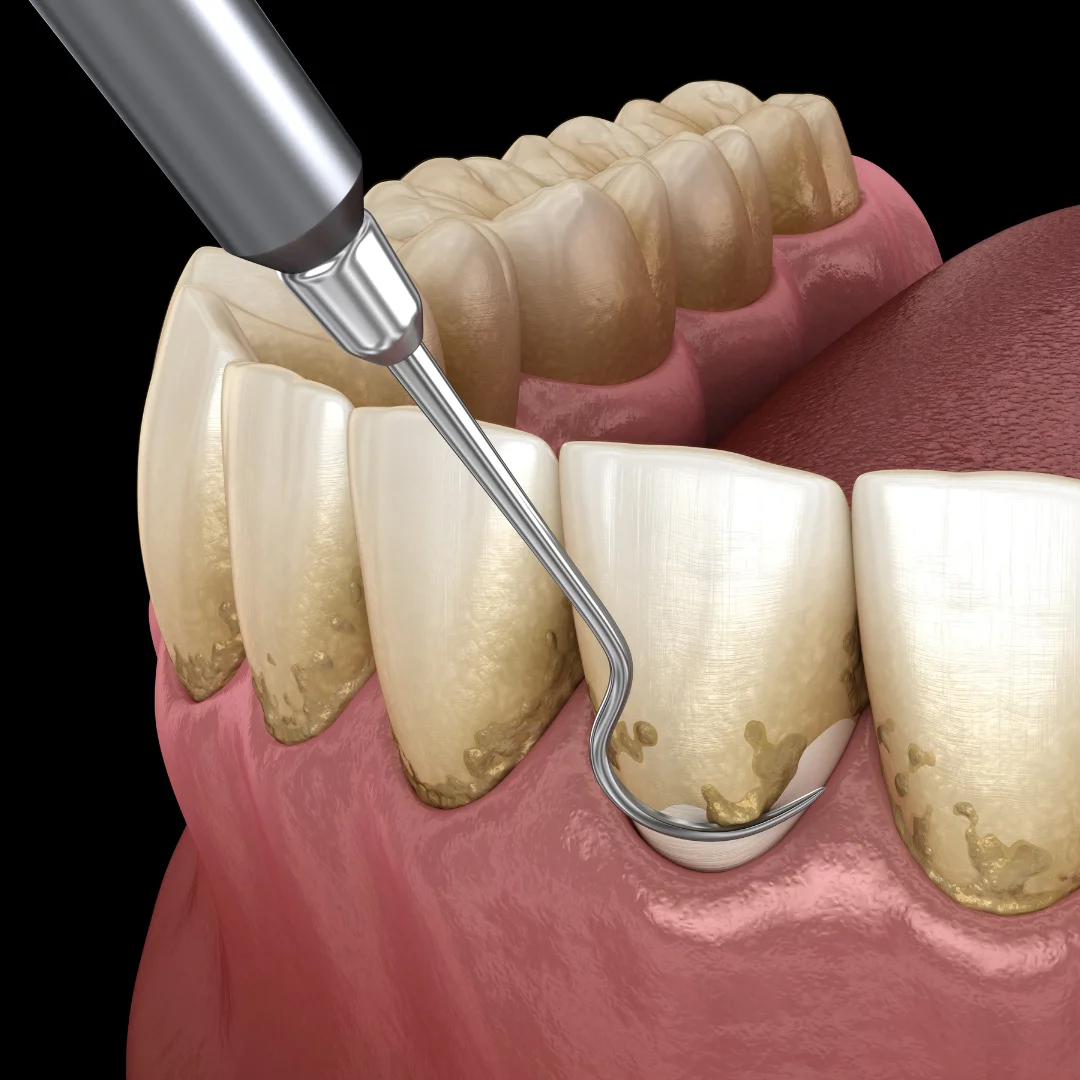
A routine cleaning polishes the parts of your teeth above the gumline and just barely beneath it. That is the right treatment when your gums are healthy. When bacteria have worked their way further down and hardened into tartar along the root surface, a standard cleaning physically cannot reach it. Your gums respond to that buried tartar by pulling away from the tooth, creating pockets that trap more bacteria, which deepens the pockets further. Cleaning only the visible surfaces at that point leaves the actual problem untouched.
What Scaling and Root Planing Actually Is
Scaling and root planing is a deep cleaning that goes below the gumline. Scaling removes plaque and hardened tartar from the tooth and root surfaces inside those pockets. Root planing then smooths the root itself, because a rough root surface gives bacteria somewhere to grip and makes reattachment harder. Together they remove the bacterial colony and give the gum tissue a clean surface to reattach to. It is a non-surgical treatment, and for early and moderate gum disease it is the standard first step rather than an aggressive one.
How the Recommendation Is Confirmed
The recommendation is not a judgment call made by eye. Your hygienist measures the depth of the pocket around each tooth with a small probe, recording six points per tooth. Healthy gums measure 1 to 3 millimeters. Readings of 4 millimeters and above, particularly with bleeding, indicate that bacteria are established below the gumline. Digital X-rays then show whether the bone supporting those teeth has started to recede. Those numbers are your baseline, and you are entitled to see them. If nobody has shown you your pocket depths, ask.
What the Appointment Is Like
Treatment is usually split across two visits, one side of the mouth each time, which keeps appointments to a manageable length and leaves you able to chew comfortably on the untreated side in between. The area is fully numbed with local anesthetic first. We use ultrasonic instruments that break up tartar with vibration and water, along with fine hand instruments for detail work along the root. Most patients are surprised by how ordinary it feels. If dental anxiety is a factor for you, say so when booking, because there are comfort options available and they work best when arranged in advance.
Ready to schedule your appointment? Call us at (818) 243-3838 or request an appointment online.
Recovery and the Weeks That Follow
Expect some tenderness for a few days and sensitivity to cold for a week or two, as root surfaces that were covered by inflamed tissue are briefly exposed. Warm salt water rinses help, as does a desensitizing toothpaste. Gums often look slightly different afterward, sitting tighter against the teeth, which occasionally reads as recession but is actually inflammation resolving. Your follow-up visit about four to six weeks later re-measures the same pockets, and that comparison is the real measure of whether treatment worked.
When Laser Treatment Enters the Conversation
If pockets stay deep after scaling and root planing, or if disease is advanced when you first come in, LANAP laser gum treatment becomes the next option. It targets diseased tissue and bacteria inside the pocket without cutting or stitching healthy gum, which historically was the only alternative. Recovery is measured in days instead of weeks. For patients who have been told they need gum surgery and have been avoiding it, the comparison in our guide to laser treatment versus traditional gum surgery is worth reading before you decide.
Periodontal Maintenance, the Part People Skip
Gum disease is managed rather than cured. Once pockets have formed, the tissue stays vulnerable, and bacteria recolonize faster than they do in a mouth that has never been affected. That is why patients move onto periodontal maintenance, typically every three to four months instead of every six. Skipping back to twice-yearly visits is the most common way people undo an otherwise successful deep cleaning. The interval is not padding, it is matched to how quickly bacteria return below your gumline.
What It Costs and What Insurance Covers
Scaling and root planing is billed by quadrant rather than as a single fee, so the total depends on how much of your mouth is affected. Most dental plans cover it at a meaningful percentage, because insurers would rather pay for a deep cleaning than for the extractions and implants that untreated gum disease leads to. Our team verifies your benefits and gives you the full figure in writing before anything is scheduled, and financing options are available. Treating early is also simply cheaper: pockets caught at 4 millimeters cost far less to manage than bone loss caught at 7.
Why This Matters Beyond Your Mouth
Gum disease is the leading cause of adult tooth loss, and the inflammation involved does not stay local. Research has linked untreated periodontal disease to cardiovascular disease, poorly controlled blood sugar, and complications in pregnancy. Our post on how a healthy smile contributes to heart health covers that connection in more depth. Treating your gums is not a cosmetic decision.
Get a Clear Answer in Glendale
If you have been told you need a deep cleaning and want a straightforward explanation, or a second opinion on whether it is warranted, we will walk you through your own pocket measurements and X-rays and explain what they mean. We welcome patients from Glendale, Burbank, Pasadena, La Crescenta, Eagle Rock, and Montrose. Call (818) 243-3838 or request an appointment online.
Frequently Asked Questions
Why do I need a deep cleaning instead of a regular one?
A regular cleaning reaches only the tooth surfaces at and just below the gumline. Once bacteria harden into tartar deeper along the root and pockets form, a standard cleaning physically cannot reach the problem. Scaling and root planing cleans below the gumline and smooths the root so tissue can reattach.
Does scaling and root planing hurt?
The area is fully numbed with local anesthetic, so the appointment itself is comfortable and most patients find it unremarkable. Expect some tenderness for a few days afterward and cold sensitivity for a week or two. Tell us in advance if you have dental anxiety, since comfort options work best when arranged ahead.
How do I know the deep cleaning is actually necessary?
Ask to see your pocket measurements. Healthy gums measure 1 to 3 millimeters, and readings of 4 millimeters or more with bleeding indicate bacteria established below the gumline. X-rays show whether bone loss has begun. Those numbers are objective and you are entitled to see them.
How many appointments does it take?
Usually two, treating one side of the mouth at each visit. That keeps appointments a reasonable length and lets you chew comfortably on the untreated side in between. A follow-up about four to six weeks later re-measures the pockets to confirm the treatment worked.
Will I need this done again?
Gum disease is managed rather than cured, so most patients move to periodontal maintenance every three to four months instead of the usual six. Returning to twice-yearly visits is the most common way a successful deep cleaning gets undone.
What if the deep cleaning does not fully work?
If pockets stay deep afterward, LANAP laser gum treatment is the usual next step. It treats diseased tissue and bacteria inside the pocket without cutting or stitching healthy gum, and recovery takes days rather than weeks. We will discuss it if your follow-up measurements call for it.